Canada’s casino game design education landscape mirrors the strategic thinking required in platforms like 4play bet, where every visual element, sound effect, and user interaction demands careful planning and artistic precision. This specialized field sits at the intersection of art, technology, and entertainment, offering creative professionals an unexpected pathway into one of gaming’s most lucrative sectors.
The rise of digital gaming has transformed casino game design from simple mechanics into immersive experiences requiring teams of artists, programmers, sound designers, and user experience specialists. Canadian institutions have responded by developing targeted programs that blend traditional art education with gaming industry demands. From Vancouver’s tech-forward approach to Ontario’s established gaming corridors, students gain access to industry partnerships, cutting-edge software training, and mentorship from professionals actively shaping the billion-dollar gaming landscape.
What makes Canada particularly compelling for aspiring game designers is its cultural mosaic. Indigenous artists, newcomers, and diverse communities bring fresh perspectives to gaming narratives and visual aesthetics, challenging the industry’s homogeneous patterns. Programs increasingly emphasize inclusive design principles, teaching students to create games that resonate across cultural boundaries while meeting strict regulatory standards.
Whether you’re a digital artist seeking specialized skills, a career changer drawn to interactive design, or an educator exploring curriculum development, understanding Canada’s casino game design programs opens doors to a field where creativity directly impacts commercial success and player engagement.
The Rising Demand for Casino Game Designers in Canada
Digital Casino Games vs. Live Casino Experiences
When aspiring designers explore casino game programs in Canada, they’ll discover two distinct career trajectories: creating digital casino games and developing live dealer experiences. Each path presents unique creative challenges that blend artistry with technical innovation.
Digital casino games offer designers tremendous creative freedom. These virtual experiences allow you to craft immersive 3D environments, develop intricate animations, and experiment with bold visual themes—from Canadian wilderness adventures featuring Indigenous art motifs to futuristic cyberpunk slot machines. The design process involves programming game mechanics, balancing mathematical algorithms, and creating user interfaces that work seamlessly across desktop and mobile platforms. You’ll collaborate with developers to ensure smooth gameplay while maintaining visual appeal.
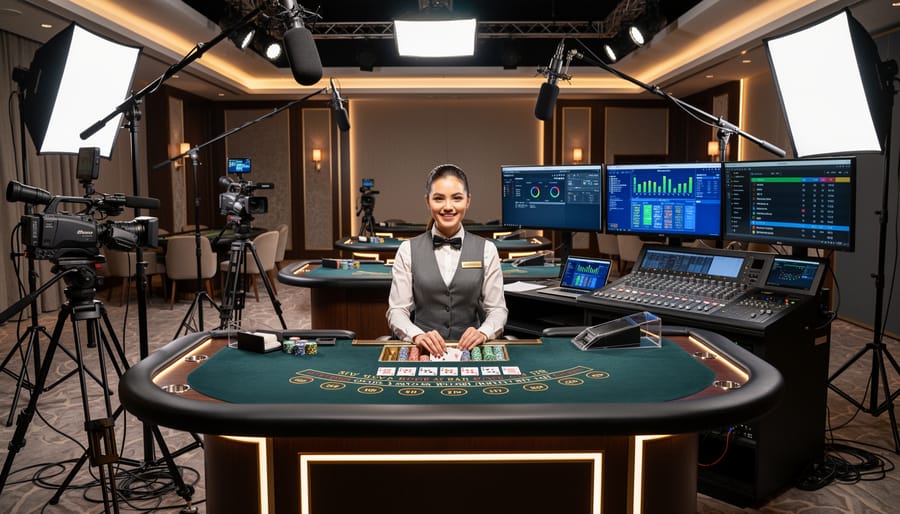
Live dealer experiences, conversely, bridge physical and digital worlds. Here, designers focus on studio aesthetics, camera angles, and real-time streaming interfaces that make players feel they’re sitting at a Vancouver or Montreal casino table. This specialty requires understanding lighting design, broadcast production, and human interaction dynamics. You’re essentially creating a theatrical space where dealers become performers and technology fades into the background.
Canadian programs often emphasize both disciplines, recognizing that tomorrow’s gaming industry demands versatile designers. Students from diverse backgrounds bring fresh perspectives—perhaps incorporating multicultural design elements that reflect Canada’s demographic tapestry or accessibility features ensuring inclusive gaming experiences.
Whether you’re drawn to the limitless digital canvas or the authentic human connection of live experiences, both paths offer exciting opportunities to shape how millions engage with entertainment technology.
Career Pathways for Casino Game Designers
Canada’s casino game design landscape offers diverse career pathways that blend creativity with technical expertise, making it an exciting field for artists and designers from all backgrounds. Whether you’re drawn to visual storytelling or interactive experiences, there’s a role that speaks to your unique talents.
Game artists bring casino games to visual life, crafting everything from slot machine symbols inspired by Canadian landscapes to character designs for narrative-driven poker games. These professionals often draw on multicultural influences, creating inclusive visual experiences that resonate with players from Vancouver’s Asian communities to Montreal’s francophone culture.
UX designers focus on player experience, ensuring games are intuitive and engaging. They conduct research, create wireframes, and test interfaces, making sure a grandmother in Thunder Bay and a millennial in Toronto can both enjoy seamless gameplay. This role particularly values designers who understand diverse user needs and accessibility considerations.
Game developers write the code that powers casino games, working with mathematics, probability, and programming languages. Many Indigenous developers are bringing unique perspectives to this field, incorporating storytelling traditions into game mechanics.
Live dealer experience designers represent an emerging specialty, creating hybrid digital-physical experiences where real dealers interact with online players. They choreograph camera angles, design studio environments, and ensure cultural authenticity in games like baccarat or roulette.
These roles interconnect within the casino gaming ecosystem, requiring collaboration between artists, designers, and developers. Canadian studios particularly value team members who bring fresh cultural perspectives, recognizing that diverse voices create richer, more engaging gaming experiences that appeal to global markets while celebrating Canada’s multicultural identity.
Canadian Universities and Colleges Offering Casino Game Design Programs
University Programs with Game Design Focus
Canada’s post-secondary landscape offers several compelling pathways for students interested in game design with casino gaming applications. While dedicated casino game design programs remain relatively specialized, numerous universities have integrated relevant coursework into their broader game design and interactive media offerings, creating opportunities for students to explore this lucrative niche.
The University of Ontario Institute of Technology (Ontario Tech) stands out with its Game Development and Entrepreneurship program, where students can focus on probability systems and reward mechanics central to casino game design. Faculty members like Dr. Kamran Sedig bring expertise in human-computer interaction, essential for creating engaging casino interfaces. The program emphasizes mathematical modeling alongside artistic execution, preparing graduates to understand both the creative and technical foundations of gambling mechanics.
Similarly, the University of British Columbia’s Master of Digital Media program attracts students interested in casino gaming applications. The curriculum covers behavioral psychology, user experience design, and monetization strategies that translate directly to casino game development. What makes this program particularly valuable is its collaborative approach, bringing together students from diverse backgrounds, including Indigenous communities and recent immigrant populations who contribute unique cultural perspectives to game narratives.
At York University in Toronto, the Digital Media program within the School of Arts, Media, Performance & Design offers courses in interactive systems and computational arts. Several faculty members research gamification and chance-based mechanics, allowing students to undertake independent studies focused specifically on casino game elements. The program’s location in Canada’s most multicultural city provides invaluable exposure to diverse gaming preferences across different cultural communities.
For those finding a Canadian art and design school with casino gaming focus, it’s worth noting that many institutions allow customization through elective selections, capstone projects, and industry partnerships with gaming companies. Several programs maintain connections with Ontario’s established gaming industry, creating internship opportunities that bridge academic learning with real-world casino game development experience.
College Diploma and Certificate Programs
Canada’s college system offers some of the most practical, career-focused pathways into casino game design, with programs specifically engineered to get you working in the industry quickly. Unlike traditional four-year university degrees, these diploma and certificate programs typically run between one and three years, emphasizing hands-on learning that mirrors real studio environments.
Fanshawe College in London, Ontario, stands out with its Game Development program, where students collaborate on actual game prototypes from day one. The program welcomes students from diverse backgrounds, including newcomers to Canada and Indigenous students, recognizing that varied perspectives strengthen game design innovation. Many colleges integrate Indigenous storytelling techniques into game narrative courses, creating culturally rich learning experiences that reflect Canada’s multicultural identity.
The true advantage of college programs lies in their co-op components. Colleges like Humber in Toronto and George Brown College maintain partnerships with gaming studios across the Greater Toronto Area, placing students directly into paid work terms. These co-ops often transform into full-time positions before graduation. One former student from Seneca College’s Interactive Media Design program started her co-op placement at a small Toronto studio and now leads a team developing casino-style mobile games played by millions.
Provincial colleges across British Columbia, Alberta, and Quebec offer similar programs tailored to their regional gaming industries. British Columbia Institute of Technology provides certificate programs perfect for career changers, while Cégep de Matane in Quebec delivers bilingual instruction, preparing graduates for both English and French-speaking markets.
These programs typically cost between 6,000 and 15,000 dollars annually for domestic students, with international student fees varying by institution. Financial aid, including grants specifically supporting underrepresented groups in tech fields, makes these programs accessible to students from all economic backgrounds.
Specialized Training and Continuing Education
Not everyone has the time or resources to commit to a full degree program, and that’s where specialized training options shine. Canada’s gaming education landscape includes various shorter-term pathways designed specifically for career changers, professionals seeking skill upgrades, or recent graduates wanting to specialize in casino game design.
Several Canadian institutions offer certificate programs and bootcamps that compress essential learning into intensive formats. These typically run between three to twelve months and focus on practical, industry-ready skills. Programs often cover game mathematics, regulatory compliance specific to casino gaming, user interface design for gaming platforms, and responsible gaming principles. Some courses incorporate Indigenous perspectives on gaming and entertainment, reflecting Canada’s commitment to cultural inclusivity in curriculum development.
Online learning platforms have made professional development more accessible than ever. Many colleges now offer hybrid models where students can complete theoretical components remotely while attending hands-on workshops for software training and prototyping sessions. This flexibility particularly benefits newcomers to Canada and professionals in remote communities who might otherwise face geographical barriers.
Industry partnerships play a crucial role in these abbreviated programs. Gaming companies frequently collaborate with educational institutions to deliver masterclasses, mentorship opportunities, and real-world projects. These connections often lead directly to employment, as companies appreciate candidates who’ve trained on current industry standards and software.
For artists and designers already working in related fields, continuing education workshops offer targeted skill development. Weekend intensives might focus on specific software like Unity or Unreal Engine for casino game development, while evening courses could address emerging technologies like virtual reality integration in gaming experiences.
The beauty of these specialized options lies in their accessibility. They welcome diverse backgrounds, from graphic designers wanting to pivot into gaming to mathematics graduates interested in game theory applications, creating a rich, multicultural learning environment that mirrors Canada’s demographic tapestry.
What You’ll Actually Learn in Casino Game Design Programs
Visual Design and User Experience for Casino Games
When you step into any casino, physical or digital, the first thing that captures your attention is the visual spectacle. Canadian casino game design programs recognize this critical element and weave comprehensive visual design training into their curricula. Students dive deep into graphic design fundamentals, learning how color theory influences player emotions and behavior. Did you know that red and gold dominate casino aesthetics because they evoke excitement and prosperity across many cultures, including diverse Canadian communities?
Animation courses teach aspiring designers how to create the smooth, rewarding visual feedback that makes slot reels spin satisfyingly or card reveals feel dramatic. Interface design becomes particularly crucial in digital casino games, where students learn to balance aesthetic appeal with functionality. The goal is creating interfaces that feel intuitive to a grandmother in Thunder Bay and a university student in Montreal alike.
Canadian programs often emphasize culturally inclusive design approaches, ensuring future designers consider how visual elements resonate with players from Indigenous, Asian, African, and European backgrounds. Students study everything from typography that ensures readability across languages to iconography that communicates universally.
Many programs incorporate real-world projects where students redesign existing casino games or create entirely new visual concepts. These hands-on experiences teach the delicate balance between creating visually stunning experiences and maintaining the clarity players need to understand game mechanics quickly. Instructors from Canadian game studios often share insights about designing for extended play sessions without causing visual fatigue, a skill that sets graduates apart in this competitive industry.
Technical Skills: Programming and Game Mechanics
Casino game design blends creative artistry with rigorous technical foundations. Students pursuing this field in Canada gain proficiency in programming languages like C++, C#, and JavaScript, which power most modern gaming platforms. Understanding game engines such as Unity and Unreal Engine becomes essential, as these tools help bring visual concepts to life while managing complex interactions.
The mathematical backbone of casino games demands deep knowledge of probability theory and random number generation (RNG). Canadian programs emphasize how these concepts ensure fair play and regulatory compliance—critical considerations given each province’s unique gaming legislation. Students learn to calculate house edges, design payout structures, and implement algorithms that maintain game integrity.
This technical training also addresses cultural considerations in game mechanics. For instance, understanding how diverse Canadian communities engage with different game types helps designers create inclusive experiences. Indigenous gaming traditions and multicultural preferences influence contemporary casino game development, making cultural awareness part of the technical toolkit.
Many programs incorporate hands-on projects where students build functional prototypes, testing their code against real-world scenarios. This practical approach prepares graduates for Canada’s growing iGaming sector while fostering innovation that respects both technical standards and cultural values.
Live Casino Design: Bridging Physical and Digital Worlds
Live dealer games represent one of the most technically demanding yet culturally fascinating intersections of game design. Canadian programs address this emerging field by teaching students how authentic casino atmosphere translates through digital mediums. The challenge lies in recreating the social energy of physical gaming floors while maintaining technical precision.
Students learn studio design principles that balance functionality with aesthetics. Lighting must flatter dealers while ensuring card clarity for multiple camera angles. Sound design becomes crucial—the satisfying click of chips, the shuffle of cards, and ambient casino ambiance all contribute to player immersion. Many Canadian institutions emphasize inclusive design practices, ensuring dealers from diverse backgrounds feel represented and comfortable, which resonates with Canada’s multicultural identity.
Real-time interaction design presents unique considerations. Chat interfaces must facilitate community while preventing toxic behavior. Gesture recognition technology allows dealers to acknowledge players naturally, bridging the physical-digital divide. Canadian designers often draw inspiration from Indigenous storytelling traditions, understanding that meaningful connection transcends medium.
Camera choreography deserves particular attention. Programs teach dynamic framing that captures action without disorienting players, considering accessibility needs like motion sensitivity. This specialized knowledge prepares graduates for leadership roles in an industry where human connection remains paramount despite technological advancement.
The Canadian Advantage: Why Study Casino Game Design Here
Cultural Diversity Enriching Design Perspectives
Canada’s vibrant multicultural landscape transforms casino game design classrooms into global creative hubs where diverse aesthetic traditions converge. Students from Asian, Middle Eastern, African, and Indigenous backgrounds bring unique gaming preferences and visual languages that reshape how educators approach curriculum development. A classroom in Vancouver might see a student drawing inspiration from Chinese mahjong traditions to reimagine slot machine mechanics, while another incorporates Indigenous storytelling patterns into progressive jackpot narratives.
This cultural cross-pollination extends beyond aesthetics. Students from communities with different relationships to gambling contribute valuable perspectives on responsible gaming design and player psychology. Programs increasingly recognize that effective casino games must resonate across cultural boundaries while respecting diverse values around luck, risk, and entertainment. Faculty members actively encourage minority students to lead design projects that challenge Western-centric gaming conventions, resulting in innovative hybrid games that blend traditional card game elements with digital interfaces.
Canadian institutions also prioritize representation in their teaching materials, showcasing game designers from underrepresented communities and examining how cultural identity shapes creative decision-making. This inclusive approach prepares graduates to design for global markets where understanding cultural nuance means the difference between a game that merely functions and one that truly connects with players worldwide.
Industry Partnerships and Real-World Experience
Canadian casino game design programs recognize that practical experience is essential for launching successful careers in this competitive industry. Leading institutions have established robust partnerships with gaming companies like Evolution Gaming, casino operators across provincial jurisdictions, and technology firms specializing in game development software. These collaborations create pathways for students to transition from classroom theory to professional practice.
Many programs incorporate mandatory co-op placements lasting four to eight months, where students work alongside experienced designers at companies developing slot machines, table game interfaces, or mobile gaming applications. Students from diverse backgrounds, including Indigenous communities and recent immigrants, often find these placements particularly valuable for building professional networks and understanding Canada’s multicultural gaming market. Universities in Ontario and British Columbia have forged especially strong ties with Vancouver’s and Toronto’s thriving tech sectors, offering students access to both established gaming corporations and innovative startups.
Collaborative projects form another cornerstone of industry engagement. Students frequently work on real client briefs, designing promotional materials for casino events, creating user interface prototypes, or developing mathematical models for new game concepts. These unique art studying opportunities allow learners to build professional portfolios while still enrolled. Some programs also host industry mentorship initiatives where seasoned game designers provide feedback and career guidance, ensuring students understand current market demands and emerging trends in responsible gaming design. This hands-on approach prepares graduates to enter the workforce with confidence and practical skills employers actively seek.
Getting Started: Admission Requirements and What to Expect
So you’re ready to level up your passion for games and design into a casino game design career? The application process is straightforward, though competitive. Most programs require a high school diploma with strong marks in mathematics and English, as you’ll be working with probability calculations and creating compelling narratives. Some institutions accept mature students or career changers who demonstrate relevant experience in graphic design, animation, or gaming industries.
Portfolio requirements vary but typically showcase your creative abilities. Include 3D modeling samples, character designs, user interface mockups, or even board game prototypes you’ve developed. Programs appreciate seeing work that demonstrates both artistic vision and technical problem-solving skills. If you’re from an Indigenous, newcomer, or underrepresented background, many Canadian institutions actively encourage applications and provide mentorship programs to support diverse perspectives in game design.
The application timeline usually opens in fall for the following academic year, with deadlines between January and March. Expect entrance assessments testing spatial reasoning, basic programming logic, and creative thinking. Some schools conduct interviews to gauge your passion for the field and collaborative spirit.
Student life in these programs is dynamic and project-intensive. You’ll spend considerable time in computer labs, working alongside classmates from various cultural backgrounds—reflective of Canada’s multicultural gaming industry. Expect collaborative projects, hackathons, and opportunities to attend industry conferences. Many programs incorporate co-op placements, giving you real-world experience before graduation.
International students should research financing options for international students early, as these specialized programs represent significant investment. However, scholarships specifically supporting arts and technology students are increasingly available, particularly for those bringing unique cultural perspectives to game narratives and design aesthetics.
Canada’s casino game design programs offer a unique gateway into one of the most dynamic intersections of art, technology, and entertainment. Whether you’re a creative spirit drawn to visual storytelling, a technical mind fascinated by programming, or someone seeking to blend both worlds, these programs provide the foundation to transform your passion into a thriving career.
The Canadian advantage extends beyond quality education. Our institutions embrace cultural diversity, welcoming perspectives from Indigenous communities, newcomers, and underrepresented groups who bring fresh narratives to gaming experiences. This inclusive environment enriches the creative process, ensuring that tomorrow’s casino games reflect the varied tapestry of players who engage with them.
As the gaming industry continues its exponential growth, professionals who understand both the artistic vision behind compelling game aesthetics and the technical expertise required to bring them to life are increasingly valuable. From Vancouver’s tech hubs to Toronto’s innovation corridors and Montreal’s vibrant creative scene, opportunities await graduates ready to shape immersive casino experiences.
The journey begins with exploration. Research programs that align with your interests, connect with current students and faculty, and envision yourself contributing to an industry where creativity meets commerce. Canada’s casino game design programs aren’t just preparing you for a job—they’re equipping you to craft experiences that captivate millions worldwide. The cards are in your hands, and the possibilities are endless.
